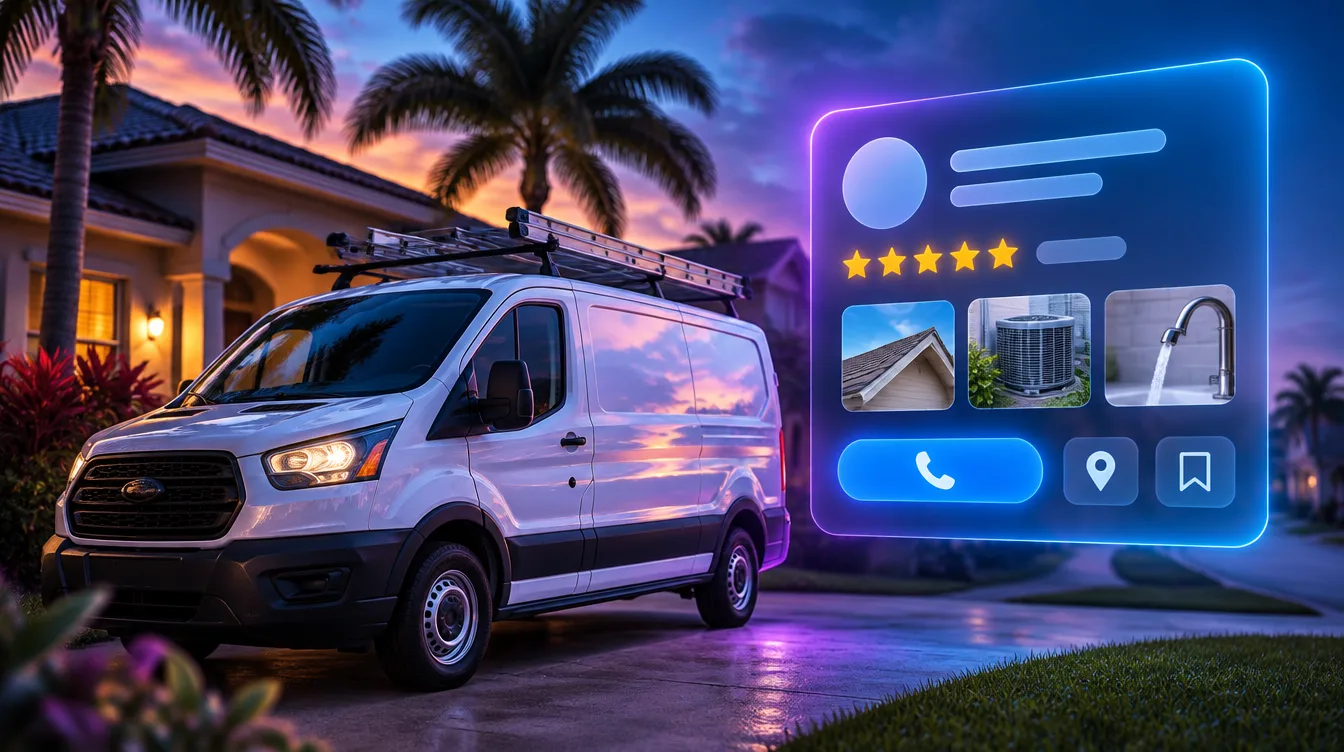

Network AI serves home service contractors nationwide and is based in Tampa Bay. The local examples below use Tampa Bay as an illustration of how a local market works — the same playbook applies in any city you serve.
Here is a scenario every contractor knows: a homeowner in Riverview has a burst pipe or a dead AC, so they search Google, fill out three forms, and call the first business that picks up. The first contractor to respond almost always gets the job — not because they are the cheapest or the most reviewed, but because they are the fastest. Here is why response speed matters so much, and how to win the race without watching your phone all day.
01Why speed wins the job
When someone submits a lead, their intent is at its peak. They have a problem right now, and they are actively looking for a solution. Every minute that passes, that intent cools — they keep searching, they find a competitor, or they decide to wait. The businesses that respond within the first few minutes consistently book more jobs than those that take an hour.
The reason is simple: the customer is calling several companies, not just you. The first one to answer is usually the one that gets the job. You do not need to be the cheapest or the most reviewed — you need to be the fastest to pick up or to acknowledge the lead.
- A lead contacted within five minutes is far more likely to answer than one called back an hour later.
- By 30 minutes, many homeowners have already booked someone else or given up.
- Speed signals reliability — a fast response tells the customer you are organized and you care.
Pro tip: you are not competing on price in those first five minutes. You are competing on who shows up first. A fast, friendly reply beats a polished pitch that arrives an hour later.
02The 5-minute playbook
You do not need to answer every lead personally in under five minutes. You need a system that acknowledges the lead instantly and keeps it warm until you can talk. That is the difference between losing a job to a competitor and booking it.
The playbook is simple: the moment a lead comes in, an automated text goes out acknowledging the request and setting an expectation. Then, when you call back, you have a warm lead who has already heard from you and is expecting the call.
- Acknowledge every lead instantly with an automated text-back.
- Route leads to a dedicated phone or a team member whose job is fast callback.
- Set an expectation in the first text so the customer knows when you will call.
Mistake to avoid: do not let leads go to your general voicemail during the day. A lead that sits in voicemail for two hours while you are under a sink is a lead that booked a competitor.
03Missed-call text-back
Most contractors lose leads to speed not because they do not care, but because they are on a roof or under a sink when the call comes in. You cannot stop mid-job to answer every call, and you should not have to. The goal is a system that responds for you the instant a lead arrives.
A missed-call text-back sends an automatic text the moment a call goes unanswered. The customer knows their call was received, and you get a moment to finish the job and call back without losing the lead to a faster competitor.
- Auto-text any missed call within seconds so the customer knows you received it.
- Include your business name and a timeframe for when you will call back.
- Route the text to your phone so you can prioritize the callback.
Pro tip: the text-back should be short, specific, and set an expectation. "Got your call — we are on a job in Brandon and will call you back within the hour" beats a generic "We will get back to you soon."
04A short reply template
The goal of the first text is not to sell — it is to acknowledge the lead, set an expectation, and start a conversation. Keep it short, friendly, and specific. Here are two templates you can adapt for your trade and your area.
Send the text the moment a lead comes in, whether it is a form fill on your website or a missed call. The sooner the customer hears from you, the more likely they are to wait for your callback instead of calling the next company on the list.
Mistake to avoid: do not send a generic text with no name or timeframe. A message that says "We got your message" with no specifics feels like an auto-responder and does not build the trust that keeps the lead warm.
You do not need to answer every lead in five minutes. You need a system that acknowledges every lead in five minutes, so you can follow up fast without being glued to your phone.
05After-hours coverage
Leads do not stop at 5pm. A homeowner with a dead AC in Lakeland on a Saturday night is not going to wait until Monday — they will call the next company on the list. After-hours coverage is how you stop losing those jobs.
The instant text-back should set the right expectation for after-hours leads: acknowledge the request, explain that you are outside business hours, and promise a callback first thing in the morning. That keeps the lead warm while being honest about your availability.
- Auto-respond to after-hours leads so they know you received the request.
- Set a clear expectation: "We are outside our hours — we will call you first thing in the morning."
- For emergencies, give the option to call or text back for an urgent response.
Pro tip: a short, honest after-hours message beats a silent phone. Homeowners will wait until morning if they know you will call first thing — they will not wait if they hear nothing at all.
06Follow-up cadence
Not every lead books on the first call. Some need a second or third touch before they are ready. A simple follow-up cadence keeps you in front of the customer without being pushy, and it catches the leads that would otherwise slip away.
A straightforward cadence is day 1, day 3, and day 7: an instant text-back on day 1, a short check-in call or text on day 3, and a final follow-up on day 7. Most contractors are shocked at how many jobs they close on the second or third touch.
- Day 1: instant text-back acknowledging the lead and setting a callback time.
- Day 3: a short, friendly check-in call or text if the lead has not booked.
- Day 7: a final follow-up to keep the door open without being pushy.
Mistake to avoid: do not stop after the first call. Many leads are not ready to book on day 1, but they are ready on day 3 or day 7. A simple cadence recovers the jobs most contractors lose.
07How BusinessOS handles this
This is exactly what BusinessOS does for Network AI clients. The moment a lead comes in from your website, BusinessOS sends an instant text-back, logs the lead in your CRM, and notifies you so you can call back fast. You stay on the job, and the lead stays warm. BusinessOS Lite is free and handles the basics — leads, jobs, and payments. For $99 a month, the full BusinessOS adds instant text-back, online booking, and higher limits. There is no hard sell — you can start free and upgrade only when it makes sense for your business.
The point is not to replace your phone or your judgment. It is to make sure no lead sits unanswered while you are on a job, and to give you a simple system that responds fast so you can focus on the work. See what BusinessOS can do for your business, or compare it to just having a website.
08Your 5-item checklist
- Set up an instant text-back for every lead — form fill or missed call.
- Give the first text a name and a specific callback timeframe.
- Cover after-hours with an honest message that sets the right expectation.
- Follow up on day 1, day 3, and day 7 so no lead slips away.
- Track how fast you respond so you can see what is working and what is not.
09FAQ
Do I really need to respond in five minutes?
The first five minutes matter because the customer is calling several companies, not just you. The first to respond usually gets the job. You do not need to answer personally every time — an instant text-back buys you time to call back.
What if I cannot answer calls while on a job?
That is exactly why a missed-call text-back exists. It acknowledges the call automatically, so the customer knows you received it and is willing to wait for your callback instead of calling the next company.
Can I automate this without sounding like a robot?
Yes. Keep the text short, specific, and in your voice. Use the customer's name, mention the job, and set a real timeframe for your callback. A specific, honest message feels personal even when it is automated.
Speed-to-lead is the cheapest, highest-leverage improvement most home-service businesses can make. You do not need a bigger ad budget or a fancier website — you need to be the first business to respond. If you would like to set up instant text-back and lead tracking for your business, Network AI can help. We build websites with lead capture built in and pair them with BusinessOS for CRM and instant follow-up. You can request a free website preview, read our local SEO checklist, or see how we handle Google Ads for Tampa Bay contractors.
Want this done for you?
Get a free website preview built for your trade — with lead capture and instant follow-up built in.